

Fire is one of the most unpredictable and dangerous hazards in any home. Even a small spark can quickly turn into a disaster if the right precautions are not taken. Protecting your family and property requires awareness, preparation, and the use of proper fire safety equipment. This article will guide you through essential fire safety tips, the types of equipment you should have at home, and practical steps to reduce the risk of fire.
Understanding the Importance of Fire Safety at Home
Many people underestimate how fast a fire can spread. A fire can engulf a room within minutes, leaving little time for escape. According to statistics, most house fire deaths are caused by smoke inhalation rather than burns. This makes it crucial to focus not only on preventing fire but also on early detection and proper response.
Fire safety is not just about having a fire extinguisher. It involves creating a safe environment, understanding fire hazards, educating family members, and using fire safety equipment effectively. In Pakistan, where many homes use gas cylinders, electric appliances, and open flames for cooking, the risk of fire is significant, making fire safety a top priority.
Common Causes of Fire in Homes
To prevent fire effectively, it is essential to understand common fire hazards:
-
Electrical Faults: Short circuits, overloaded sockets, and faulty wiring are leading causes of household fires. Regular electrical inspections and avoiding overloading appliances can reduce the risk.
-
Cooking Accidents: Leaving cooking unattended, grease fires, and careless handling of stoves often cause kitchen fires. Always keep flammable items away from the stove and never leave cooking unattended.
-
Gas Leaks: LPG cylinders or piped gas leaks can lead to explosions if not handled properly. Installing gas leak detectors and checking cylinders regularly is crucial.
-
Heating Equipment: Heaters, geysers, and electric irons can cause fires if left on or placed near flammable materials.
-
Candles and Open Flames: Candles, incense sticks, and diyas are often used at home. Keeping them away from flammable surfaces and never leaving them unattended is important.
Essential Fire Safety Tips for Home Protection
Taking preventive measures can significantly reduce the chances of fire. Here are some practical fire safety tips:
-
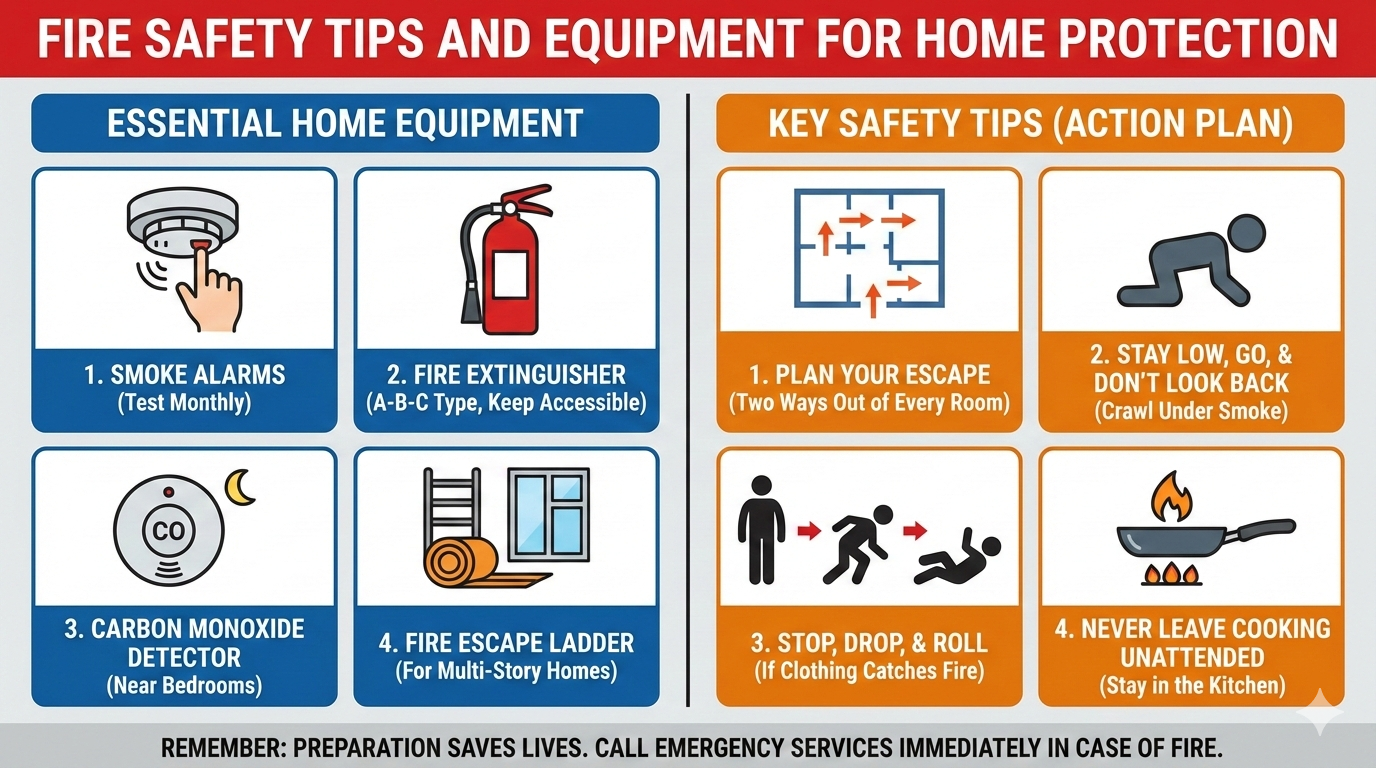
Install Smoke Detectors: Smoke detectors provide early warnings and save lives. Place them in bedrooms, hallways, and kitchens. Test them regularly and change batteries every six months.
-
Plan an Escape Route: Every family member should know at least two ways to exit the house in case of fire. Practice fire drills every few months to ensure everyone is familiar with the plan.
-
Keep Fire Extinguishers Handy: Fire extinguishers are essential fire safety equipment. Keep them in the kitchen, living room, and near electrical panels. Make sure everyone knows how to use them properly.
-
Avoid Overloading Electrical Sockets: Plugging too many devices into one socket can cause overheating. Use surge protectors and avoid daisy-chaining multiple extensions.
-
Store Flammable Materials Safely: Keep kerosene, petrol, and other flammable liquids away from heat sources. Store them in well-ventilated areas outside the living space.
-
Supervise Cooking: Never leave cooking unattended, especially when frying or grilling. Keep a lid nearby to smother grease fires.
-
Use Safe Heating Practices: Keep heaters at least one meter away from curtains, furniture, or flammable objects. Turn off heaters and irons when not in use.
Types of Fire Safety Equipment for Home Use
Using proper fire safety equipment can make a huge difference during an emergency. Here are the essential items every home should have:
-
Fire Extinguishers: Fire extinguishers are the first line of defense. There are different types:
-
Water-based extinguishers: Suitable for wood, paper, and cloth fires.
-
CO2 extinguishers: Ideal for electrical fires and flammable liquids.
-
Foam extinguishers: Effective on liquid fires like oil and gasoline.
-
-
Smoke Detectors: Smoke detectors alert occupants to fire in its early stages. Opt for detectors with both smoke and carbon monoxide detection features.
-
Fire Blankets: Fire blankets are useful for smothering small fires, especially in the kitchen. They are also handy for wrapping around a person whose clothes have caught fire.
-
Fire Alarm Systems: For larger homes, installing a fire alarm system ensures immediate warning for all family members, even when they are asleep.
-
Emergency Exit Signs and Flashlights: Power outages during a fire are common. Emergency lights and flashlights help in safe evacuation.
-
Sprinkler Systems: Though more common in commercial buildings, small residential sprinklers are becoming popular. They activate automatically when high heat is detected.
How to Use Fire Extinguishers Effectively
Knowing how to use a fire extinguisher can save lives. Follow the PASS method:
-
P – Pull the pin to unlock the extinguisher.
-
A – Aim the nozzle at the base of the fire.
-
S – Squeeze the handle to release the extinguishing agent.
-
S – Sweep the nozzle from side to side until the fire is fully out.
Remember, only attempt to extinguish small fires. For large fires, evacuate immediately and call emergency services.
Fire Safety Practices for Specific Areas in the Home
-
Kitchen: The kitchen is the most common place for fires. Always keep a fire extinguisher nearby, avoid loose clothing while cooking, and never pour water on oil fires.
-
Living Areas: Keep electrical appliances in good condition, avoid overloading sockets, and store candles safely.
-
Bedrooms: Install smoke detectors and keep exits clear. Avoid placing heaters near bedding or curtains.
-
Garage and Storage Areas: Store flammable liquids safely, keep electrical wiring checked, and ensure proper ventilation.
Educating Family Members about Fire Safety
Fire safety is a shared responsibility. Everyone in the household should know how to react during a fire. Teach children how to call emergency numbers, stop, drop, and roll if clothes catch fire, and identify escape routes. Conduct regular fire drills to build confidence and reduce panic during an actual emergency.
Maintenance of Fire Safety Equipment
Fire safety equipment is only effective if maintained regularly. Smoke detectors should be tested monthly, extinguishers checked annually, and fire blankets inspected for wear and tear. Replace old or expired equipment immediately. Regular maintenance ensures that everything works properly when needed.
The Role of Fire Safety in Insurance and Legal Protection
In Pakistan, having fire safety equipment in homes can sometimes influence home insurance policies. Insurers may offer better terms if proper safety measures are in place. Additionally, demonstrating adherence to fire safety standards can protect homeowners legally in case of accidental fires.
Advanced Fire Safety Measures
For those who want extra protection, consider installing home automation systems integrated with fire detection. Smart smoke detectors can send alerts to your phone, even when you are away, allowing immediate action. Fireproof doors, windows, and wall coatings can also slow down fire spread, buying critical time for evacuation.
Conclusion
Fire safety at home is not an option—it is a necessity. Combining awareness, preventive measures, and proper fire safety equipment can protect your family and property from devastating losses. By installing smoke detectors, keeping fire extinguishers, planning escape routes, and educating your household, you can minimize fire risks significantly. Remember, the key to effective fire safety is preparation and timely action. Your home should not just be a place of comfort but also a safe haven against fire hazards.
Investing in the right fire safety equipment and practicing fire safety tips daily can save lives and property. Start today—review your home, identify hazards, and ensure you are fully prepared for any fire emergency.


