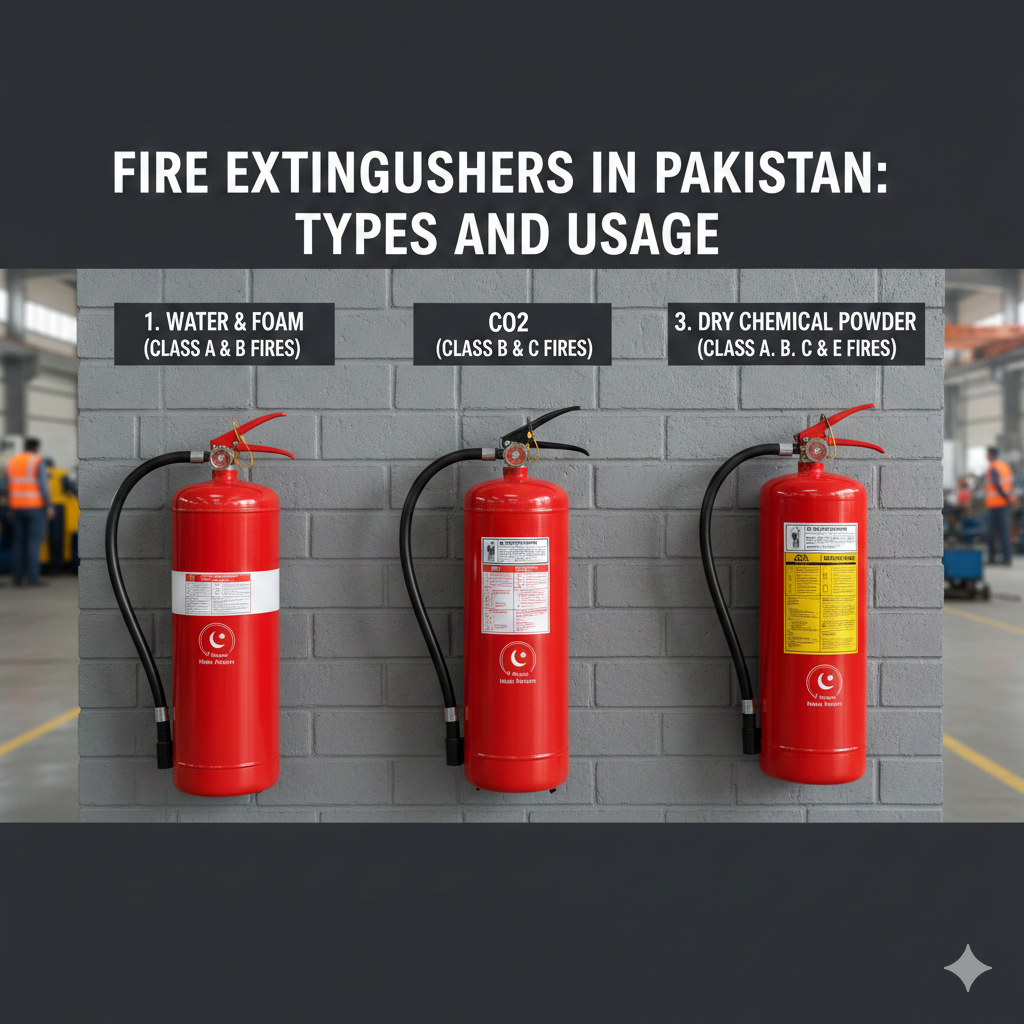
Fire is one of the most dangerous emergencies that can occur in homes, offices, factories, or public spaces. In Pakistan, where fire incidents in commercial and residential areas are common due to electrical faults, gas leaks, or negligence, understanding fire safety has become essential. One of the most important tools for controlling small fires and preventing major disasters is a fire extinguisher. This article explores the types of fire extinguishers available in Pakistan, their usage, and the importance of fire safety equipment.
Importance of Fire Safety Equipment
Fire safety equipment is not just a legal requirement in commercial spaces but also a critical factor in protecting lives and property. Fire extinguishers are part of essential fire safety equipment that helps to control small fires before they become uncontrollable. Having the right fire safety equipment in homes, offices, factories, and vehicles ensures that in case of an emergency, immediate action can be taken. In Pakistan, where fire safety awareness is still growing, equipping your premises with fire extinguishers can make a significant difference in reducing casualties and property loss.
Understanding Fire Classes
Before discussing fire extinguishers, it is crucial to understand the classification of fires. Fires are categorized based on the type of material that is burning. The main fire classes are:
-
Class A: Fires involving ordinary combustible materials like wood, paper, cloth, or plastics.
-
Class B: Fires involving flammable liquids such as gasoline, oil, paint, or alcohol.
-
Class C: Fires involving electrical equipment, wiring, or appliances.
-
Class D: Fires involving combustible metals like magnesium, potassium, or aluminum.
-
Class K: Fires involving cooking oils and fats, usually in kitchens.
Each type of fire requires a specific type of extinguisher. Using the wrong extinguisher can be ineffective or even dangerous.
Types of Fire Extinguishers in Pakistan
In Pakistan, several types of fire extinguishers are available, each designed to handle specific fire classes. Choosing the right extinguisher depends on the environment and the materials present.
1. Water Fire Extinguishers
Water fire extinguishers are primarily used for Class A fires involving materials like wood, paper, and textiles. They work by cooling the fire and reducing its temperature below the ignition point.
These extinguishers are not suitable for electrical or flammable liquid fires, as water can conduct electricity and spread the fire. Water extinguishers are commonly found in schools, offices, and residential buildings in Pakistan due to their effectiveness against ordinary combustible materials.
2. Foam Fire Extinguishers
Foam fire extinguishers are versatile and suitable for Class A and Class B fires. They work by forming a blanket over flammable liquids, cutting off the oxygen supply and preventing the fire from spreading.
Foam extinguishers are ideal for offices, workshops, and petrol stations in Pakistan where flammable liquids are present. They are safe for use on solid combustibles but should not be used on electrical fires unless specifically marked as safe.
3. Carbon Dioxide (CO2) Fire Extinguishers
CO2 fire extinguishers are designed for Class B and Class C fires. Carbon dioxide works by displacing oxygen around the fire, suffocating it. CO2 extinguishers leave no residue, making them ideal for electrical fires in offices, server rooms, and electronic shops.
In Pakistan, CO2 extinguishers are commonly used in commercial spaces with sensitive electrical equipment. However, they are less effective for outdoor fires or areas with strong wind because the gas can disperse quickly.
4. Dry Powder Fire Extinguishers
Dry powder extinguishers are multipurpose and can be used on Class A, B, and C fires. They work by coating the fire with a layer of powder, which interrupts the chemical reaction of the fire.
These extinguishers are widely used in industries, factories, and workshops in Pakistan due to their effectiveness on a variety of fire types. However, the powder can cause a mess and may damage sensitive equipment, so careful consideration is required.
5. Wet Chemical Fire Extinguishers
Wet chemical extinguishers are specifically designed for Class K fires, which involve cooking oils and fats. They work by forming a soapy layer on the surface of the burning oil, cooling it and preventing re-ignition.
In Pakistan, wet chemical extinguishers are essential for commercial kitchens, hotels, and restaurants. Using water or other types of extinguishers on oil fires can cause dangerous flare-ups, making wet chemical extinguishers the safest option.
How to Use a Fire Extinguisher
Having a fire extinguisher is only effective if you know how to use it. The standard method for operating a fire extinguisher is remembered with the acronym PASS:
-
P – Pull the pin: This unlocks the extinguisher and allows you to discharge the contents.
-
A – Aim at the base of the fire: Targeting the flames is not enough; aim at the fuel source to extinguish the fire effectively.
-
S – Squeeze the handle: Apply pressure to release the extinguishing agent.
-
S – Sweep from side to side: Move the extinguisher nozzle across the fire until it is completely out.
It is important to maintain a safe distance while using the extinguisher and have an escape route ready in case the fire spreads.
Maintenance of Fire Extinguishers in Pakistan
Fire extinguishers require regular maintenance to ensure they function correctly during an emergency. In Pakistan, many fires occur because extinguishers are outdated, uncharged, or improperly installed. Key maintenance tips include:
-
Inspecting the extinguisher monthly for damage, corrosion, or leaks.
-
Checking the pressure gauge to ensure it is in the green zone.
-
Shaking dry powder extinguishers periodically to prevent the powder from settling.
-
Ensuring extinguishers are accessible and not blocked by furniture or storage items.
-
Getting extinguishers professionally serviced annually by certified fire safety companies in Pakistan.
Legal Requirements for Fire Extinguishers in Pakistan
In Pakistan, fire safety regulations require commercial buildings, hospitals, schools, and factories to have adequate fire safety equipment. Compliance with local fire safety codes includes:
-
Installing fire extinguishers at strategic locations.
-
Conducting fire drills to train employees or residents.
-
Ensuring proper signage indicating the location of fire extinguishers.
-
Keeping records of fire extinguisher maintenance and inspections.
Non-compliance can result in fines, closure notices, or legal liabilities in case of fire accidents.
Choosing the Right Fire Extinguisher
Selecting the right fire extinguisher depends on the environment and potential fire hazards. For homes in Pakistan, a combination of water and CO2 extinguishers may cover most risks. Offices with electrical equipment should prioritize CO2 extinguishers. Restaurants require wet chemical extinguishers for kitchen fires, and factories dealing with flammable liquids or metals may need foam or dry powder extinguishers.
Training and Awareness
Even with the best fire safety equipment, untrained individuals may panic and fail to act effectively during a fire. Regular training on how to use fire extinguishers and understanding fire classes is crucial. Many companies in Pakistan now offer fire safety training programs, teaching employees and residents how to respond quickly and safely.
The Role of Fire Safety Companies in Pakistan
Fire safety companies play a vital role in promoting awareness and providing high-quality fire safety equipment. They supply various types of fire extinguishers, install them in buildings, and offer maintenance services. In addition, they provide consultancy for risk assessment and fire safety compliance. Choosing a trusted fire safety company ensures that the extinguishers are reliable and meet international standards.
Conclusion
Fire extinguishers are an essential part of fire safety equipment in Pakistan. Understanding the different types, their uses, and proper maintenance is key to protecting lives and property. Whether for homes, offices, factories, or public spaces, having the right fire extinguisher and knowing how to use it can prevent small fires from turning into disasters. Fire safety is a responsibility that should never be overlooked, and investing in quality fire safety equipment is a step toward a safer Pakistan.
By prioritizing fire safety, educating people about fire extinguisher usage, and maintaining equipment properly, Pakistan can reduce fire-related accidents and create safer environments for everyone.


