

Fire safety is not a luxury it is a legal obligation and a moral responsibility. Every year, commercial buildings in Karachi face devastating losses due to inadequate fire safety systems. Whether you own a factory in SITE Industrial Area, manage a corporate office in Clifton, or run a shopping mall in Gulshan-e-Iqbal, installing a properly designed fire alarm system can be the difference between a minor incident and a catastrophic disaster.
This comprehensive Fire Alarm System Installation Guide walks you through everything you need to know from understanding the types of fire alarm systems to the step-by-step installation process, local compliance requirements, and how to integrate your fire alarm with a complete fire suppression system. If you are a building owner, facility manager, contractor, or safety officer in Karachi or anywhere in Pakistan, this guide is written for you.
By the end of this guide, you will have a complete roadmap to install, test, and maintain a commercial fire alarm system that meets NFPA 72, local KDA (Karachi Development Authority) requirements, and international best practices.
1. Why Every Commercial Building in Karachi Needs a Fire Alarm System
Karachi is Pakistan’s largest commercial hub, home to thousands of factories, offices, hospitals, schools, warehouses, and retail stores. With dense urban development, aging electrical infrastructure, and increasing industrial activity, the fire risk in Karachi’s commercial sector is among the highest in South Asia.
The tragic Baldia Town factory fire of 2012, which claimed over 260 lives, remains a grim reminder of what happens when fire safety systems are ignored. That disaster, and countless others since, underscored the urgent need for proper fire alarm installation in every commercial building across the city.
Key reasons why a fire alarm system is mandatory for commercial buildings:
- Early detection saves lives: Smoke and heat detectors can detect a fire in its early stages, giving occupants time to evacuate safely.
- Property protection: A fire alarm system triggers suppression systems and alerts emergency services, minimizing property damage.
- Legal compliance: Pakistan’s building codes and NFPA standards require fire alarm systems in commercial buildings above a certain size.
- Insurance requirements: Most insurers in Pakistan require documented fire safety systems for commercial building coverage.
- Reduced liability: Properly installed and maintained systems protect building owners from legal liability in case of fire incidents.
2. Types of Fire Alarm Systems for Commercial Buildings
Before starting any installation, you must understand the types of fire alarm systems available. Choosing the right type depends on your building size, occupancy type, budget, and the level of monitoring required.
A. Conventional Fire Alarm Systems
Conventional systems divide a building into zones. When a detector is triggered, the control panel identifies which zone the fire is in, but not the exact device. These are cost-effective and well-suited for small to medium-sized commercial buildings in Karachi with a straightforward floor layout. Brands like Honeywell Gent and C-TEC offer excellent conventional panels widely used across Pakistan.
B. Addressable Fire Alarm Systems
Addressable systems assign a unique address to each detector, sounder, and call point. When an alarm is triggered, the control panel displays the exact location of the device on the panel. This makes them ideal for large commercial buildings, shopping malls, hospitals, and multi-story office towers in Karachi’s business districts like I.I. Chundrigar Road, Shahrah-e-Faisal, and PECHS. Systems like COFEM Spain’s ZAFIR Control Panel and Honeywell Gent’s VIGPLUS series are popular choices for addressable installations.
C. Wireless Fire Alarm Systems
Wireless systems use radio frequency communication between devices and the control panel, eliminating the need for extensive cable routes. These are suitable for heritage buildings, rented commercial spaces, or locations where drilling and cable routes is difficult or expensive.
D. Hybrid Fire Alarm Systems
Hybrid systems combine both wired and wireless technologies, offering flexibility in complex building environments. They are increasingly popular in mixed-use developments in Karachi, such as commercial-residential towers in DHA and Bahria Town Karachi.
3. Key Components of a Commercial Fire Alarm System
A complete commercial fire alarm system consists of multiple interconnected components. Understanding each component is essential before you begin the installation process.
Fire Alarm Control Panel (FACP)
The brain of the entire system. It receives signals from detectors and initiates alarms. For commercial buildings in Karachi, popular options include the Honeywell Gent VIGPLUS-24, VIGPLUS-72, and COFEM ZAFIR series.
Smoke Detectors
Optical smoke detectors detect visible particles of combustion. They are ideal for offices, corridors, and storage areas. Addressable smoke sensors like the COFEM A50SI or Honeywell S4-720 offer precise location identification.
Heat Detectors
These trigger when a fixed temperature is reached or when the rate of temperature rise exceeds a set limit. They are used in kitchens, boiler rooms, and dusty industrial environments where smoke detectors may give false alarms.
Manual Call Points (Break Glass Units)
Allow occupants to manually trigger the fire alarm. They should be installed at every exit, stairwell, and corridor junction, at a height between 1.2m and 1.4m from the floor.
Sounders and Beacons (Visual Alarms)
Alert occupants via loud audible alarms and flashing visual beacons. In noisy industrial environments in Karachi’s SITE or Korangi Industrial areas, high-decibel sounders are essential.
Repeater Panels
Display alarm information at a secondary location, such as a security desk or reception. These are standard in large buildings with multiple floors.
Battery Backup Unit
Provides power to the fire alarm system during electricity outages a critical feature in Karachi, where load-shedding remains a reality.
4. Fire Alarm System Installation Guide: Step-by-Step Process
This is the core of our Fire Alarm System Installation Guide. Follow these steps to ensure your commercial fire alarm system is installed correctly, complies with standards, and functions reliably.
Step 1: Conduct a Fire Risk Assessment
Before any equipment is purchased or installed, commission a professional Fire Risk Assessment of your commercial building. In Karachi, this assessment should be carried out by a certified fire safety engineer. The assessment evaluates the building layout, occupancy type, potential fire hazards, escape routes, and the most suitable type and placement of fire alarm devices. This step is also required by most insurance companies and commercial property regulators in Pakistan.
Step 2: Develop a Fire Alarm System Design
Based on risk assessment, a system design is produced. This design document includes a floor plan showing the location of every detector, manual call point, sounder, beacon, and the control panel. It specifies cable routes, the number of zones (for conventional systems) or loop addresses (for addressable systems), and power supply requirements. For buildings in Karachi above three stories or over 500 square meters, an addressable system design is strongly recommended.
Step 3: Obtain Necessary Permits
In Karachi, commercial building fire safety installations require approval from the Karachi Building Control Authority (KBCA) and may require sign-off from the Karachi Fire Brigade. Ensure that your fire alarm design drawings are submitted and approved before work begins. Failure to obtain the required permits can result in fines and legal liability in the event of a fire.
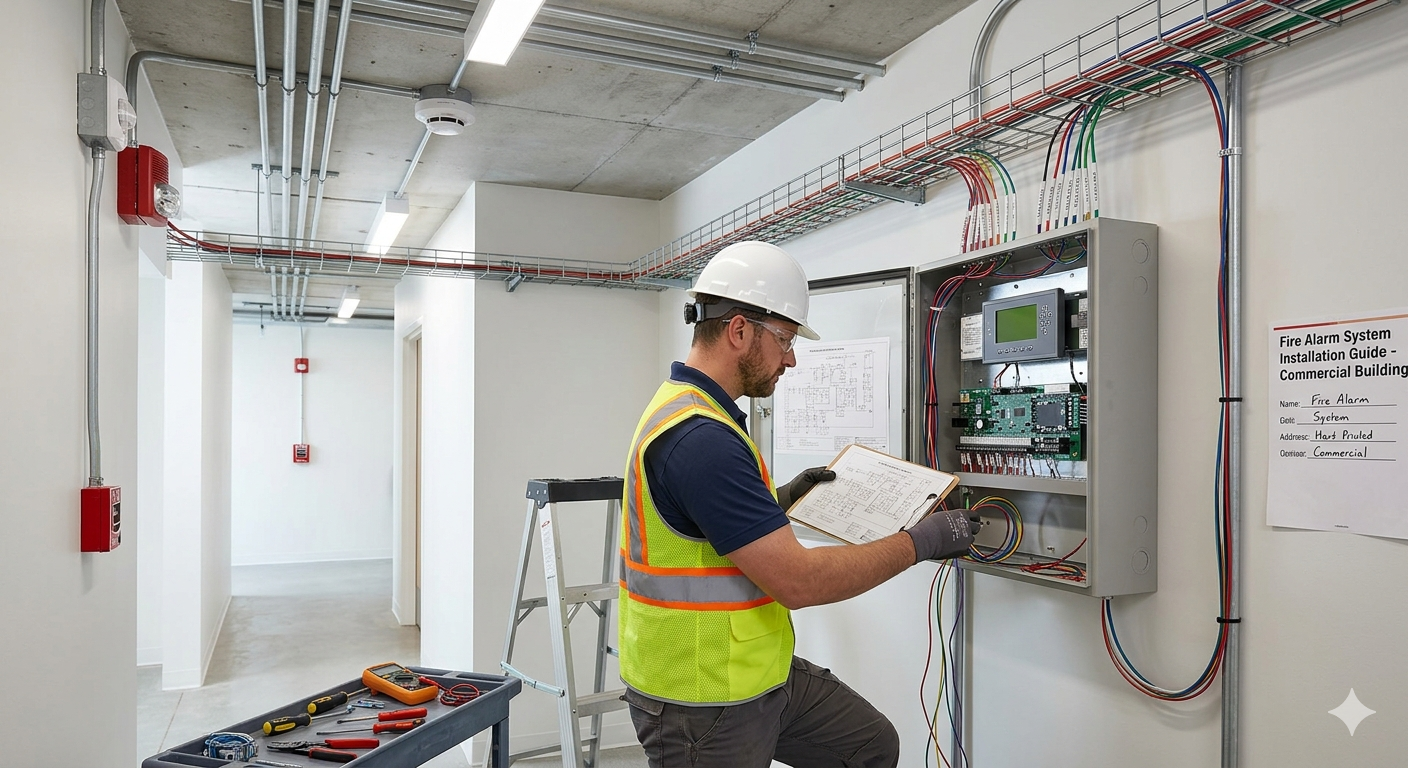
Step 4: Install Cable Infrastructure
Fire alarm systems require dedicated, fire-resistant cabling. In Pakistan and internationally, twisted-pair, shielded cable such as FP200 or fire-rated MICC cable is standard for commercial installations. All cable routes should be clearly marked, run in conduct or cable trays, and kept physically separate from power cables to prevent interference. For addressable systems, the cable forms a loop (SRL Short Circuit Isolator Loop) connecting all devices back to the control panel.
Step 5: Mount Detectors and Devices
Install smoke detectors on the ceiling at the positions specified in the design drawings. NFPA 72 and BS 5839 standards specify maximum coverage areas per detector typically 60-80 square meters per detector in standard ceiling heights up to 6m. Heat detectors should be placed closer together, with a maximum coverage area of approximately 25-30 square meters. Manual call points should be placed near all fire exits and on every floor landing of stairwells, visible and unobstructed. Sounders and visual beacons must be positioned to be audible and visible from every occupied area of the building.
Step 6: Install the Fire Alarm Control Panel
The Fire Alarm Control Panel (FACP) should be installed in a secure, easily accessible location typically the main security room, reception area, or fire control room. It must be at a height where the display is easily readable (approximately 1.5m from the floor). Ensure adequate ventilation around the panel and that the main power supply connection meets the panel’s electrical requirements. The panel must be connected to a dedicated circuit on the building’s electrical distribution board.
Step 7: Wire and Commission the System
Connect all detectors, call points, sounders, and beacons to the control panel following the manufacturer’s wiring diagrams. For addressable systems, program each device’s unique address into the panel. Once wired, the system should be powered up and tested device by device. Any false zones or communication errors must be resolved before final commissioning. A commissioning report documenting the test results for every device in the system must be prepared.
Step 8: Conduct a Full System Test
A full system test activates every detector and manual call point and verifies that the control panel correctly identifies the device location and triggers the appropriate sounders and beacons. The battery backup should also be tested by simulating a mains power failure. In Karachi, the Karachi Fire Brigade may require witnessing or certifying this test for large commercial premises. All test results should be documented and signed off by the commissioning engineer.
Step 9: Train Building Staff
Installation is not complete until building staff are trained. Key personnel including security guards, facility managers, and floor wardens must know how to respond to a fire alarm, how to use the control panel, how to perform a manual reset after a false alarm, and how to conduct a fire drill. Training should be documented and repeated annually.
Step 10: Set Up a Maintenance Schedule
NFPA 72 and BS 5839 require regular testing and maintenance of fire alarm systems. In commercial buildings in Karachi, a weekly visual check, monthly functional test of a sample of devices, and a full annual inspection by a certified engineer are standard requirements. Maintenance contracts with reputable fire safety companies ensure that your system always remains fully operational.
5. Fire Alarm System Standards and Compliance in Pakistan
Commercial buildings in Karachi must comply with a combination of local regulations and international standards. The primary standards applicable to fire alarm installations in Pakistan are:
- NFPA 72 (National Fire Alarm and Signaling Code): The most widely referenced standard for fire alarm system design, installation, and testing in Pakistan.
- BS 5839 (British Standard for Fire Detection and Alarm Systems): Commonly specified by UK-affiliated consultants and multinational companies operating in Karachi.
- KBCA Building Regulations: The Karachi Building Control Authority’s local building codes include fire safety requirements for commercial buildings, including fire alarm provisions.
- NFPA 101 (Life Safety Code): Covers occupancy-specific fire safety requirements, including egress, emergency lighting, and alarm systems.
- Pakistan Engineering Council (PEC) Guidelines: PEC-registered engineers are often required to sign off on fire safety designs for commercial buildings.
6. Integrating Your Fire Alarm System with a Fire Suppression System
A fire alarm system detects and warns but a fire suppression system actively fights the fire. For comprehensive fire protection in commercial buildings, these two systems must work together seamlessly.
When a fire alarm is triggered, it can simultaneously activate your fire suppression system, release magnetic door holders to close fire doors, recall lifts to the ground floor, activate emergency lighting, and notify the fire brigade via a monitoring center. This integration is standard in modern commercial buildings across Karachi and is required by NFPA standards for high-risk occupancies.
Fire Safety Trading (Pvt) Ltd offers a comprehensive range of fire suppression systems in Pakistan, including water-based systems, FM 200 gas suppression, NOVEC 1230, CO2 suppression, kitchen suppression systems, and more. Their fire suppression system solutions can be integrated with your fire alarm system to create a complete, intelligent fire protection setup for your commercial building.
For data centers and server rooms in Karachi, FM 200 or NOVEC 1230 suppression systems are the preferred choice, as they extinguish fire without damaging sensitive electronic equipment. For warehouses and industrial facilities in areas like SITE, Korangi, or Bin Qasim Industrial Zone, water-based sprinkler systems or foam-based suppression systems are typically more appropriate.
7. Common Mistakes to Avoid During Fire Alarm Installation
Even with the best equipment, poor installation practices can render a fire alarm system unreliable. Here are the most common mistakes seen in commercial buildings across Karachi:
- Installing too few detectors: Underestimating the number of detectors required leads to blind spots in coverage. Always follow the area coverage requirements specified in NFPA 72 or BS 5839.
- Using non-fire-rated cable: Standard electrical cable deteriorates quickly in fire conditions. Always use fire-resistant LSOH (Low Smoke Zero Halogen) cable for all fire alarm wiring.
- Incorrect detector placement: Placing smoke detectors near air conditioning vents, cooking areas, or dusty environments causes frequent false alarms. Follow placement guidelines strictly.
- Neglecting battery backup: In a city like Karachi where power outages are common, an undersized or poorly maintained battery backup can leave a building unprotected.
- Skipping commissioning documentation: Without a proper commissioning report and test records, it is impossible to demonstrate compliance or identify faults during maintenance.
- No integration with suppression system: A fire alarm without a linked suppression system is only half the solution. Ensure both systems are fully integrated and tested together.
- Poor staff training: Even the best-installed system is ineffective if building staff do not know how to respond to an alarm or how to use the control panel.
8. Fire Alarm System Maintenance in Karachi
Installation is just the beginning. A fire alarm system must be regularly maintained to remain effective. In Karachi’s environment characterized by heat, humidity, dust, and frequent power fluctuations maintenance is especially critical.
Recommended maintenance schedule:
Weekly: Visual inspection of the control panel to check for any fault or alarm indicators. Ensure the green light is illuminated.
Monthly: Test at least one manual call point per zone, rotating through all devices over the year. Test the battery backup by isolating mains power briefly.
Quarterly: Functionally test a sample of smoke and heat detectors. Clean detector heads to remove dust accumulation a common issue in Karachi’s dusty urban environment.
Annually: Full system inspection and test by a certified fire alarm engineer. All devices should be tested, and the commissioning record updated. Battery replacement should be considered every 3-4 years.
Fire Safety Trading (Pvt) Ltd provides professional fire alarm maintenance services across Karachi and Pakistan. Their certified engineers conduct thorough inspections, servicing, and testing to ensure your fire alarm system remains compliant and fully operational throughout its service life.
9. Cost of Fire Alarm System Installation in Karachi
The cost of a commercial fire alarm system in Karachi varies significantly based on the type of system, the size of the building, the number of devices, and the brand of equipment selected. As a general guide:
- Small commercial premises (up to 500 sqm) with a conventional system: PKR 150,000 PKR 400,000
- Medium commercial building (500-2000 sqm) with an addressable system: PKR 400,000 PKR 1,200,000
- Large commercial building or multi-story tower with a fully integrated addressable system: PKR 1,200,000 and above
- Annual maintenance contracts: Typically, 10-15% of the installation cost per year
These are indicative figures only. Always obtain a detailed quotation from a certified fire safety contractor in Karachi based on a site survey and your specific requirements. The cost of not having a working fire alarm system in terms of lives, property, and legal liability far exceeds any installation investment.
10. Choosing a Fire Alarm Installation Company in Karachi
Selecting the right fire alarm installation contractor is as important as selecting the right equipment. When evaluating fire alarm companies in Karachi, look for the following:
- PEC-registered engineers on staff or as consultants
- Experience with commercial installations of similar size and occupancy type
- Authorized dealer or installer status for the brands they supply (e.g., Honeywell, COFEM, C-TEC)
- Ability to provide full commissioning documentation and compliance certificates
- An ongoing AMC (Annual Maintenance Contract) offering
- References from previous commercial installations in Karachi
Conclusion
A properly designed and installed fire alarm system is the cornerstone of fire safety in any commercial building. This Fire Alarm System Installation Guide covers every essential aspect from understanding the types of systems available, to the step-by-step installation process, compliance requirements, integration with suppression systems, and ongoing maintenance.
For commercial building owners and managers in Karachi, the message is clear: do not delay. Whether your building is in DHA, Clifton, PECHS, Saddar, SITE Industrial Area, or Korangi, the investment in a quality fire alarm and suppression system protects your employees, your customers, your property, and your business.
To explore complete fire suppression system solutions that integrate seamlessly with your fire alarm installation, visit Fire Safety Trading (Pvt) Ltd at https://firesafetytrading.com.pk/fire-suppression-system/ Pakistan’s trusted source for world-class fire safety equipment, installation, and maintenance services.
Frequently Asked Questions (FAQs)
Here are the top 10 questions asked by commercial building owners and facility managers in Karachi about fire alarm systems:
Q1. Is it mandatory to install a fire alarm system in commercial buildings in Karachi?
Yes. Under Karachi Building Control Authority (KBCA) regulations and Pakistan’s building codes, commercial buildings above a specified size are legally required to have a fire alarm system. Additionally, NFPA standards widely adopted in Pakistan mandate fire alarm systems in virtually all commercial occupancies. Non-compliance can result in building closure orders, fines, and, in the event of a fire, serious legal liability.
Q2. What is the difference between a conventional and addressable fire alarm system?
A conventional system divides the building into zones, telling you which zone a fire is in, but not the exact device. An addressable system gives every device a unique address, so the control panel tells you the exact location of the triggered device. Addressable systems are more accurate, easier to maintain, and better suited for large commercial buildings. Conventional systems are more economical and suitable for smaller buildings with simple layouts.
Q3. How many smoke detectors do I need for my commercial building?
The number of smoke detectors depends on the floor area, ceiling height, and room layout. As a general rule under NFPA 72 and BS 5839, each smoke detector covers approximately 60-80 square meters at standard ceiling heights. A fire safety engineer will calculate the exact number required based on a site survey and your building’s specific design.
Q4. Can a fire alarm system work during a power outage in Karachi?
Yes, this is a critical requirement. All commercial fire alarm systems are required to have a battery backup capable of sustaining the system in standby mode for at least 24 hours, followed by 30 minutes of full alarm operation. Given Karachi’s frequent load-shedding, it is recommended to size your battery backup generously and test it regularly.
Q5. How long does a commercial fire alarm system installation take?
The installation timeline depends on the size and complexity of the building. A small commercial premises may take 2-3 days. A medium-sized office building might take 1-2 weeks. A large multi-story commercial tower with a fully integrated addressable system could take 4-8 weeks. The design, permit approval, and procurement phases add additional time before installation begins.
Q6. How does a fire alarm system integrate with a fire suppression system?
The fire alarm control panel has relay outputs that can trigger external systems when an alarm is activated. When connected to a fire suppression system, the alarm activates the suppression agent release, closes fire dampers, recalls lifts, and can notify a remote monitoring station. Fire Safety Trading (Pvt) Ltd specializes in the integration of fire alarm and fire suppression systems for commercial buildings across Pakistan.
Q7. What maintenance is required for a fire alarm system in Karachi?
Weekly visual checks, monthly testing of manual call points and battery backup, quarterly inspection and cleaning of detectors, and a full annual inspection by a certified engineer are all recommended. Karachi’s dusty environment means detectors need more frequent cleaning than in cleaner climates. Most fire safety companies offer Annual Maintenance Contracts (AMC) that cover all scheduled service.
Q8. What brands of fire alarm systems are best for commercial buildings in Pakistan?
Popular and widely supported brands in Pakistan include Honeywell Gent, COFEM Spain, and C-TEC for fire alarm panels and devices. These brands offer both conventional and addressable systems with full local support and spare parts availability. For projects requiring international-grade equipment with local after-sales support, Fire Safety Trading (Pvt) Ltd is an authorized supplier of multiple premium fire alarm and suppression brands in Pakistan.
Q9. What is the average lifespan of a commercial fire alarm system?
With regular maintenance, a commercial fire alarm system should last 10-15 years. Smoke detectors typically have a service life of 10 years. The control panel and cabling can often last longer if properly maintained. In Karachi’s climate, heat and humidity can accelerate detector aging, making regular testing and timely replacement of aging devices essential.
Q10. Where can I get a fire alarm system installed for my commercial building in Karachi?
Fire Safety Trading (Pvt) Ltd is one of Pakistan’s leading providers of fire safety equipment, installation, and maintenance services. They supply and install fire alarm systems, fire suppression systems, fire extinguishers, and a full range of fire safety equipment for commercial and industrial buildings across Karachi and Pakistan. You can learn more about their fire suppression system solutions at https://firesafetytrading.com.pk/fire-suppression-system/ or contact them at 0315-4233313 for a consultation and quotation.


