
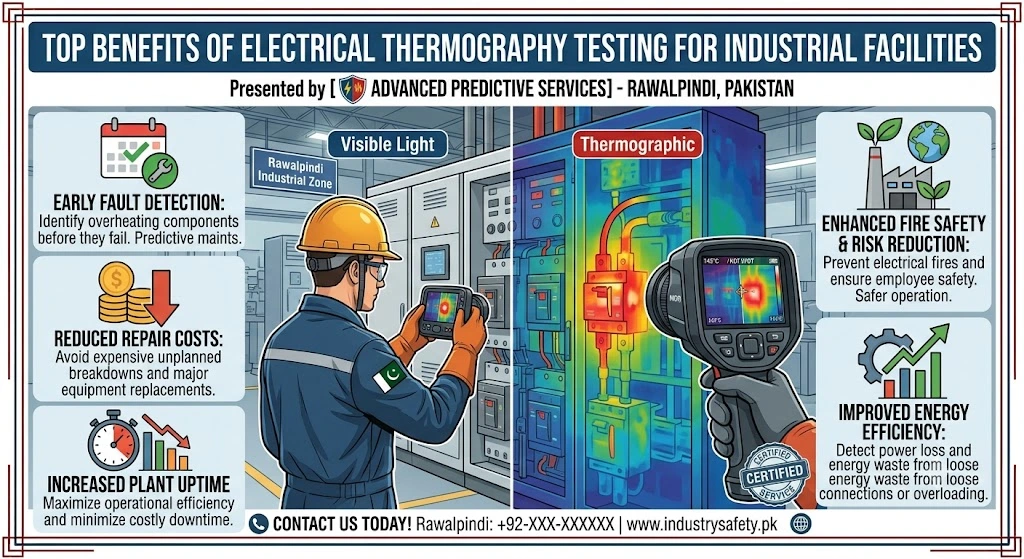
Electrical systems keep every industrial facility running, but they rarely fail without warning. A loose connection, an overloaded circuit, or a worn-out component usually heats up long before it causes a breakdown or a fire. The problem is that this heat is invisible to the naked eye. This is exactly where electrical thermography testing becomes valuable for factories, warehouses, mills, and power distribution units across Pakistan.
An electrical thermography test uses thermal imaging technology to detect abnormal heat patterns in electrical panels, switchgear, transformers, motors, and wiring systems while they are still operating. Instead of shutting equipment down to inspect it, trained technicians scan live systems and identify hotspots that signal an early-stage fault. For industrial facility owners and safety managers, this single testing method can prevent costly downtime, protect workers, and stop electrical fires before they start.
In this guide, we will walk through the top benefits of electrical thermography testing for industrial facilities in Pakistan, explain how the process works, and show why more factories and industrial units are now making it a routine part of their maintenance schedule. Whether you run a textile mill, a manufacturing plant, a warehouse, or a commercial complex, understanding what this test offers can help you make a more informed decision about your facility’s electrical safety strategy.
What Is Electrical Thermography Testing?
Fire Safety Trading (Pvt)
ToggleElectrical thermography testing is a non-contact inspection method that uses infrared cameras to capture the surface temperature of electrical components. Every electrical connection carries some resistance, and resistance naturally produces heat. When a connection is loose, corroded, overloaded, or damaged, resistance increases sharply, and so does the heat it generates.
A thermal imaging camera converts this invisible infrared radiation into a visible color-coded image, often called a thermogram. Bright colors such as red, orange, and white typically indicate hotspots, while cooler areas appear in blue, green, or purple. A trained thermographer reads these images, compares them against normal operating temperatures, and flags any component that is running hotter than it should.
Because the test is carried out while equipment is powered on and functioning normally, there is no need to switch off production lines or interrupt daily operations. This makes electrical thermography testing one of the most practical and non-disruptive inspection tools available to industrial facilities today.
Top Benefits of Electrical Thermography Testing for Industrial Facilities
Industrial facilities in Pakistan run heavy machinery, long production shifts, and dense electrical networks. A single overlooked fault can shut down an entire line or, worse, start a fire. Below are the most important benefits that make electrical thermography testing a smart investment for any industrial setup.
1. Early Detection of Electrical Faults
The biggest advantage of thermography testing is that it catches problems while they are still small. Loose terminals, corroded connectors, unbalanced loads, and failing insulation all generate excess heat long before they cause a visible failure. A thermal scan picks up these warning signs weeks or even months ahead of an actual breakdown, giving maintenance teams enough time to plan repairs on their own schedule instead of reacting to an emergency.
This early-warning capability matters most in facilities where electrical panels are hidden inside enclosures or mounted in areas that are rarely inspected up close. A technician walking past a panel would have no way of knowing that a connection inside is running twenty or thirty degrees hotter than it should. Thermal imaging removes that blind spot, turning an invisible risk into a clearly documented, measurable finding that can be tracked over time.
2. Preventing Unplanned Downtime
Every hour a production line sits idle costs money. Electrical failures are one of the most common causes of unplanned stoppages in factories, textile mills, and processing plants. Because thermography identifies developing faults before they escalate, facility managers can schedule repairs during planned maintenance windows rather than losing production time to a sudden trip or breakdown. This kind of predictive maintenance approach is far more cost-effective than reactive repairs.
Unplanned downtime rarely affects just one machine. A single tripped breaker or a burned bus bar can take down an entire section of a production line, delay shipments, and force overtime shifts to catch up on lost output. By scheduling repairs proactively based on thermography findings, facilities avoid the ripple effect that one small electrical fault can have across an entire operation.
3. Reducing Fire Risk in Industrial Facilities
Electrical faults are among the leading causes of industrial fires in Pakistan, especially in older buildings with aging wiring or facilities running equipment beyond its rated capacity. A hotspot in a panel or junction box can smoulder for hours before it ignites nearby insulation, dust, or stored materials. Regular thermography scans catch these hotspots early, allowing repairs before a small fault turns into a fire that threatens workers, machinery, and the entire building.
Fire risk is often highest in facilities that combine dense electrical wiring with flammable materials, such as textile units, packaging plants, and warehouses storing paper or plastic goods. In these environments, even a small overheating fault sitting near combustible material can escalate quickly. Routine thermal scanning is one of the simplest ways to catch that risk before it becomes a serious incident.
4. Extending the Lifespan of Electrical Equipment
Heat is one of the fastest ways to degrade electrical components. Transformers, motors, switchgear, and cabling all lose efficiency and structural integrity when they repeatedly run hotter than their rated temperature. By identifying and correcting overheating issues early, thermography testing helps equipment operate within safe temperature ranges, which slows down wear and significantly extends its usable life.
Insulation on cables and windings is particularly sensitive to sustained heat exposure. Even a moderate but continuous temperature rise can shorten insulation life by years, eventually leading to short circuits or complete equipment failure. Keeping components within their designed operating temperature through regular thermography checks is one of the most reliable ways to protect long-term capital investment in electrical infrastructure.
5. Lowering Overall Maintenance Costs
Fixing a loose connection or replacing a worn breaker is inexpensive compared to repairing a burned-out panel or replacing an entire motor. Thermography testing shifts maintenance spending from expensive emergency repairs to low-cost preventive fixes. Over time, this approach reduces total maintenance costs, cuts down on emergency callouts, and lowers the risk of collateral damage to surrounding equipment.
When an electrical fault is left unchecked, the damage rarely stays contained to a single component. Heat can spread to adjacent wiring, connectors, and enclosures, turning a small repair into a much larger and more expensive project. Facilities that invest in regular thermography scans typically spend far less on electrical repairs over the course of a year than those relying only on reactive maintenance.
6. Improving Workplace Safety for Employees
Industrial workers spend long hours near live electrical panels, distribution boards, and heavy machinery. An undetected fault can lead to arc flashes, electrical shocks, or fires that put lives at risk. Thermography testing gives facility owners a clear picture of which areas need attention, allowing them to address hazards before anyone gets hurt. This proactive approach to electrical safety builds a safer working environment for the entire team.
Arc flash incidents in particular can cause severe burns and injuries to workers standing near a panel when a fault occurs. Since many arc flash events are preceded by a period of rising resistance and heat, thermography testing acts as an early warning system that helps prevent these incidents rather than simply responding after one has already happened.
7. Supporting Regulatory Compliance and Insurance Requirements
Many insurance providers and industrial safety regulations now expect facilities to carry out routine electrical inspections, including thermal imaging surveys. Having documented thermography reports on file demonstrates that a facility takes fire prevention and equipment safety seriously. This can support smoother insurance claims, reduce premiums over time, and help facilities meet audit or compliance requirements without last-minute scrambling.
Facility audits and safety certifications increasingly ask for evidence of a structured preventive maintenance program rather than a general statement that equipment is checked periodically. A dated thermography report with clear findings and corrective actions gives auditors and insurers exactly the kind of documentation they are looking for, which can make renewals and inspections considerably smoother.
8. Non-Invasive Testing With No Production Interruption
Unlike some inspection methods that require shutting down equipment, thermography testing is carried out while systems are live and under normal working load. This means production does not need to stop, shifts are not disrupted, and technicians can complete a full facility scan without affecting output. For industrial operations running on tight schedules, this non-invasive nature is one of the most practical benefits of the test.
This is particularly important for facilities that run continuous processes, such as textile dyeing lines or cold storage units, where even a brief shutdown can affect product quality or require a lengthy restart procedure. Because thermography is performed from a safe distance without touching or disconnecting equipment, it fits neatly into normal working hours without any special downtime planning.
9. Data-Driven Maintenance Planning
Every thermography inspection produces a detailed report with thermal images, temperature readings, and severity ratings for each identified issue. This data allows maintenance teams to prioritize repairs based on actual risk levels rather than guesswork. Facilities can build a maintenance history over multiple inspections, track recurring problem areas, and make smarter decisions about equipment upgrades or replacements.
Over several inspection cycles, this data starts to reveal patterns, such as a particular panel that consistently runs hot or a motor that keeps showing rising temperatures despite repairs. Recognizing these patterns early allows facility managers to plan larger upgrades or replacements well in advance, rather than being caught off guard by a sudden failure.
10. Protecting Business Continuity and Reputation
A major electrical fire or equipment failure does not just damage property. It can halt production for days or weeks, delay client orders, and damage a company’s reputation for reliability. Regular thermography testing is a straightforward way to protect business continuity, reassure clients and stakeholders, and avoid the kind of large-scale disruption that a preventable electrical fault can cause.
For export-oriented industries in particular, missed delivery deadlines caused by an avoidable fire or breakdown can affect long-term client relationships and contracts. Demonstrating a consistent thermography and preventive maintenance program can also become a point of confidence for clients and partners evaluating a facility’s operational reliability.
How Electrical Thermography Testing Works
The process is straightforward and designed to cause minimal disruption to daily operations.
Step 1: Initial Site Assessment
A technician reviews the facility layout, identifies critical electrical assets such as panels, transformers, motors, and distribution boards, and plans the scanning route. This step also involves checking access to enclosures and confirming which systems will be under load at the time of inspection, since thermal patterns are only meaningful when equipment is actively drawing current.
Step 2: Live Thermal Scanning
Using an infrared camera, the technician scans electrical components while the system is under normal operating load. Since equipment generates the most accurate heat signatures when it is actively working, testing is usually done during regular production hours. Panel covers are opened where safe to do so, allowing the camera to capture connections, busbars, and terminals directly rather than through an enclosure.
Step 3: Identifying and Rating Hotspots
Any component showing an abnormal temperature rise is flagged and compared against similar components under the same load, a method known as comparative analysis. Hotspots are then classified by severity, ranging from minor issues that can wait for the next scheduled maintenance window to critical faults that need immediate attention to avoid an imminent failure.
Step 4: Detailed Reporting
A written report is prepared with thermal images, temperature data, location of each issue, and recommended corrective action, along with a priority ranking for each finding. This report becomes part of the facility’s maintenance record and can be referenced during future inspections to track whether previously identified issues have been resolved.
Step 5: Corrective Action and Follow-Up
Facility maintenance teams address the flagged issues, whether that means tightening a connection, replacing a worn breaker, or rebalancing an overloaded circuit. A follow-up scan can then confirm that repairs were successful and temperatures have returned to normal levels, closing the loop on each identified fault.
Which Industrial Facilities in Pakistan Need Thermography Testing Most
While any facility with electrical infrastructure can benefit from thermography testing, certain industries face higher risk due to heavy machinery, continuous operations, or dense electrical loads.
- Textile mills and garment factories with high-load motors and continuous production lines
- Steel, cement, and heavy manufacturing plants running large transformers and switchgear
- Warehouses and cold storage facilities with dense wiring and refrigeration equipment
- Food processing units where equipment runs for long, uninterrupted shifts
- Power distribution stations, substations, and generator rooms
- Hospitals and pharmaceutical plants where equipment failure can affect critical operations
- Shopping malls, hotels, and commercial complexes with large electrical distribution boards
Signs Your Industrial Facility May Need Thermography Testing Now
While scheduled annual or semi-annual inspections are the standard approach, some warning signs suggest a facility should not wait for its next scheduled scan.
- Circuit breakers that trip frequently without an obvious cause
- Panels, cables, or motor housings that feel warm to the touch
- A faint burning smell near electrical enclosures or distribution boards
- Discoloration, scorch marks, or melted insulation around connectors
- Recent addition of new heavy machinery that increases overall electrical load
- A facility that has never had a thermal imaging inspection despite years of continuous operation
- Flickering lights or unstable voltage in specific sections of the building
If any of these signs are present, it is worth arranging a thermography inspection as soon as possible rather than waiting for the next routine maintenance cycle. Catching a serious fault early can be the difference between a minor repair and a major incident.
Common Myths About Electrical Thermography Testing
Myth: Thermography Testing Is Only for Large Factories
Many people assume thermal imaging inspections are only necessary for massive industrial plants. In reality, any facility with a meaningful electrical load, including mid-sized warehouses, workshops, and commercial buildings, can develop the same kinds of loose connections and overloaded circuits that lead to failures. Facility size matters less than electrical complexity and usage hours.
Myth: If Equipment Is Working Fine, There Is No Need to Test It
Electrical faults are progressive by nature. A connection can be quietly heating up for months while equipment continues to function normally on the surface. By the time a visible problem appears, such as a tripped breaker or a burning smell, the underlying damage may already be significant. Thermography testing is valuable precisely because it finds problems before they become noticeable.
Myth: Thermography Testing Can Replace All Other Electrical Inspections
Thermal imaging is an excellent tool for spotting heat-related issues, but it is not a substitute for a complete electrical inspection. Some faults, such as insulation resistance problems or grounding issues, may not always show up as a temperature difference. Thermography works best as part of a broader preventive maintenance program that includes visual inspections, load testing, and routine servicing.
Why Choose Professional Electrical Thermography Services
Thermal imaging cameras are precision instruments, and reading a thermogram correctly requires training and experience. A qualified thermographer knows how to account for factors like ambient temperature, load conditions, emissivity of different materials, and viewing angle, all of which can affect the accuracy of a scan. Working with a professional testing provider ensures that reports are reliable, findings are prioritized correctly, and nothing important gets missed.
Facilities across Pakistan looking for a reliable inspection partner can rely on the electrical thermography test services offered by Fire Safety Trading, which combine trained technicians, calibrated infrared equipment, and detailed reporting to help industrial facilities catch electrical faults before they turn into costly failures.
Whether you manage a single production unit or a network of facilities, scheduling regular thermography inspections is one of the most cost-effective steps you can take to protect your equipment, your workforce, and your business operations.
Cost of Testing vs Cost of an Electrical Failure
Facility owners sometimes hesitate to schedule thermography testing because it looks like an added expense on top of an already busy maintenance budget. Looked at on its own, the cost of a routine thermal scan seems small. Compared against what a serious electrical failure can cost, however, the value becomes much clearer.
A single unplanned shutdown caused by a burned panel or a failed transformer can mean days of lost production, emergency contractor call-out charges, replacement parts sourced on short notice, and in some cases damage to finished goods or raw materials caught in the affected area. If the fault leads to a fire, the costs multiply further, covering structural repairs, equipment replacement, insurance deductibles, and the time needed to get the facility fully operational again.
A routine thermography inspection, by comparison, is a scheduled, predictable cost. It does not interrupt production, and any issues it uncovers can usually be resolved with a straightforward repair rather than an emergency response. Viewed this way, thermography testing is less an added expense and more a form of insurance against the far larger costs that an undetected electrical fault can eventually cause.
Conclusion
Electrical thermography testing gives industrial facilities a clear, practical way to catch problems before they become expensive or dangerous. From reducing fire risk and preventing unplanned downtime to extending equipment life and supporting compliance, the benefits reach every part of an industrial operation. As more facilities across Pakistan adopt predictive maintenance practices, thermography testing is quickly becoming a standard part of responsible facility management rather than an optional extra.
The facilities that benefit most are the ones that treat thermography testing as an ongoing practice rather than a one-time check. Building it into a regular maintenance calendar, alongside other preventive measures, gives facility owners a consistent, up-to-date picture of their electrical system’s condition, and that consistency is ultimately what keeps operations running safely and without interruption.
Frequently Asked Questions
1. What is electrical thermography testing used for?
It is used to detect abnormal heat patterns in electrical systems such as panels, switchgear, transformers, and motors, helping identify faults like loose connections or overloaded circuits before they cause failures or fires.
2. How often should industrial facilities schedule thermography testing?
Most industrial facilities benefit from at least one full thermography scan per year, though high-risk or heavily loaded facilities often schedule scans every six months for closer monitoring. Facilities that have recently added new machinery, expanded their electrical load, or experienced past electrical issues may also want an additional inspection outside their regular schedule.
3. Does thermography testing require shutting down equipment?
No. Thermography testing is non-invasive and is usually performed while equipment is running under normal load, so production does not need to stop.
4. Can thermography testing prevent electrical fires?
Yes. By identifying overheating components early, thermography testing allows repairs before a hotspot has a chance to ignite nearby materials, significantly lowering fire risk.
5. What equipment is typically inspected during a thermal scan?
Common inspection points include distribution panels, circuit breakers, transformers, motors, cable connections, switchgear, and control panels.
6. How long does an electrical thermography inspection take?
The duration depends on facility size and the number of electrical assets, but most industrial scans are completed within a few hours to a full working day. Larger facilities with multiple buildings, substations, or production areas may require a scan spread across more than one day to cover every asset thoroughly.
7. Is thermography testing suitable for older industrial buildings?
Yes, and it is especially valuable for older buildings, since aging wiring and outdated panels are more likely to develop loose connections or insulation breakdown over time.
8. What happens after a hotspot is identified?
The issue is documented in a report with its severity rating, and the maintenance team carries out repairs such as tightening connections, replacing components, or rebalancing loads, followed by a check to confirm the fix worked.
9. Does thermography testing help with insurance or compliance requirements?
Yes. Many insurers and industrial safety standards recognize thermography reports as evidence of proactive maintenance, which can support compliance audits and insurance claims.
10. Who should perform electrical thermography testing?
It should be carried out by trained thermographers using calibrated infrared cameras, since accurate interpretation of thermal images requires experience with electrical systems and thermal imaging analysis. Working with an established provider also ensures the resulting report is detailed enough to guide maintenance decisions and support insurance or compliance documentation.