
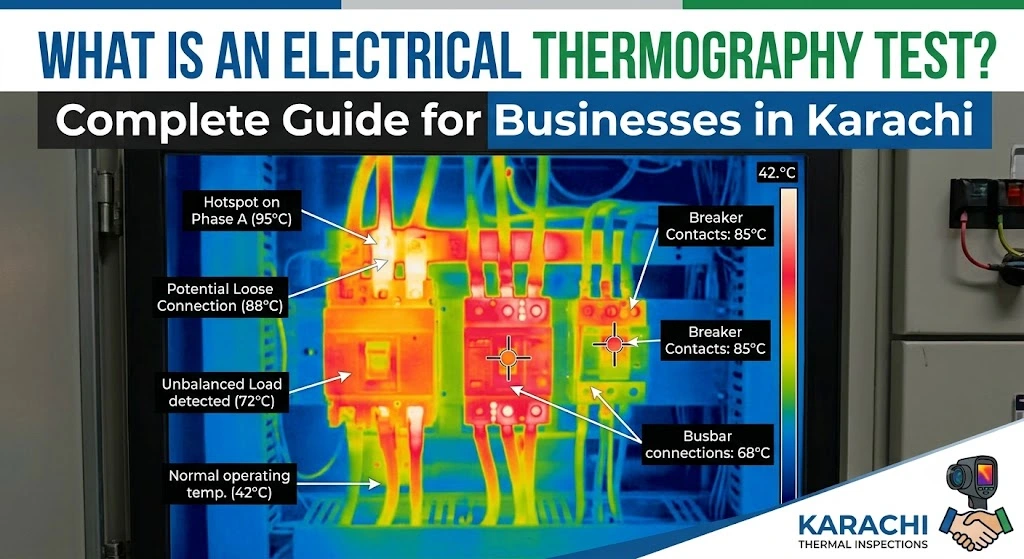
Every year, faulty wiring, overloaded circuits, and loose electrical connections cause thousands of preventable fires in factories, offices, and commercial buildings across Karachi. Most of these failures do not happen without warning. Long before a wire melts or a breaker fails, the connection heats up quietly behind a panel door, invisible to the naked eye. An electrical thermography test is the tool that catches this heat before it turns into smoke.
In this guide, we explain what an electrical thermography test is, how it works, why it matters for businesses operating in Karachi’s climate and industrial environment, and how to build it into your fire safety routine. Whether you manage a single retail outlet or a multi-building industrial complex, understanding this test will help you make more informed decisions about protecting your property, your equipment, and the people who work in it.
What is an Electrical Thermography Test?
Fire Safety Trading (Pvt)
ToggleAn electrical thermography test, also called infrared thermographic inspection or IR scanning, is a non-contact method of examining electrical equipment while it is still running under normal load. A trained thermographer uses a specialised infrared camera to capture the surface temperature of electrical components such as panels, breakers, busbars, cables, and connectors.
Every electrical connection generates a small amount of heat as current passes through it. When a connection is loose, corroded, overloaded, or otherwise damaged, its resistance increases and it produces noticeably more heat than the surrounding components. An infrared camera converts this heat pattern into a colour-coded thermal image, so a technician can immediately see which parts of an electrical system are running hotter than they should.
Because the test is non-invasive, it does not require shutting down equipment, opening enclosures unnecessarily, or interrupting business operations. This makes it one of the most practical ways to catch electrical problems while the facility keeps running.
How Does Electrical Thermography Work?
The process relies on infrared radiation, which every object emits in proportion to its temperature. Electrical thermography follows a fairly consistent sequence, regardless of the size of the facility being inspected.
1. Load Verification
Thermography is only meaningful when equipment is under a representative electrical load, ideally 40 percent or higher of its rated capacity. A technician first confirms the load conditions so the readings reflect real operating stress rather than a system sitting mostly idle.
2. Infrared Scanning
Using a calibrated thermal imaging camera, the technician scans panels, switchgear, distribution boards, motor connections, cable joints, transformers, and other current-carrying components. The camera captures both a thermal image and, usually, a standard visual photo of the same component for comparison.
3. Temperature Analysis
Each hotspot is compared against the temperature of similar components carrying a similar load, or against ambient temperature, using established severity classifications. A small temperature difference might simply be logged for monitoring, while a large difference signals an urgent repair need.
4. Reporting and Recommendations
The findings are compiled into a report with thermal images, temperature readings, severity ratings, and clear recommendations, such as tightening a connection, replacing a breaker, or rebalancing a circuit load.
Why Electrical Thermography Testing Matters for Karachi Businesses
Karachi’s combination of high summer temperatures, humidity, dust, voltage fluctuations, and heavy reliance on backup generators and UPS systems puts extra stress on electrical infrastructure. Several local realities make thermography especially valuable here.
- High ambient heat already pushes electrical components closer to their thermal limits, so a small fault reaches dangerous temperatures faster than it would in a cooler climate.
- Frequent load shedding and generator switching create repeated electrical stress cycles that loosen connections over time.
- Dust and humidity accelerate corrosion at terminals and busbar joints, a leading cause of resistance-related heating.
- Karachi’s dense commercial and industrial zones, including factories, malls, hospitals, and high-rise offices, mean an electrical fire can affect large numbers of people and cause significant business interruption.
- Insurance providers and fire safety auditors increasingly expect documented thermographic inspection records as part of a facility’s preventive maintenance program.
Given these factors, an annual or biannual thermography test is not just a best practice, it is a practical necessity for any business that wants to avoid unplanned downtime and reduce fire risk. Facilities that run production lines, cold storage, or continuous HVAC systems place near-constant demand on their electrical infrastructure, which means the margin for a loose connection to sit unnoticed before failure is much smaller than in a lightly used space.
There is also a financial dimension worth considering. A single unplanned outage caused by an electrical fault can halt production, spoil perishable stock, damage sensitive equipment, and disrupt customer service for hours or days. Compared against the cost of a scheduled thermographic survey, the potential losses from even one preventable incident usually far outweigh the price of routine inspection.
What Equipment is Inspected During a Thermography Test?
A thorough electrical thermography survey typically covers all the major current-carrying components in a facility. Common inspection points include:
- Main distribution panels and sub-distribution boards
- Circuit breakers, fuses, and disconnect switches
- Busbars and bus duct connections
- Transformers and their terminations
- Motor control centres (MCCs) and starters
- Cable joints, terminations, and lugs
- UPS systems and battery banks
- Generator connections and automatic transfer switches
- Lighting panels and power outlets in high-load areas
For larger industrial sites, thermographers usually work from a single-line diagram or equipment list so that nothing is missed and results can be tracked over time. This equipment list also becomes valuable for future inspections, since it allows the same points to be re-scanned year after year and compared against previous readings, making it easier to spot a component that is gradually trending toward failure rather than one that has suddenly developed a fault.
Warning Signs That Your Facility Needs a Thermography Test
While thermography is most effective as a scheduled, preventive activity, certain warning signs should prompt an inspection right away.
- Breakers or panels that feel warm to the touch, or discoloured, scorched, or melted plastic around outlets and switches
- A persistent burning smell near electrical equipment with no obvious source
- Flickering lights or equipment that trips or shuts down intermittently
- Recent addition of heavy machinery, air conditioning units, or other high-load equipment
- A history of electrical faults, repairs, or a near-miss incident in the building
- Ageing wiring or panels that have not been inspected in more than a year
If any of these apply to your facility, it is worth scheduling a thermographic inspection before the next scheduled maintenance cycle.
Key Benefits of Electrical Thermography Testing
Fire Prevention
Loose and overheating connections are one of the leading root causes of electrical fires. Thermography identifies them while they are still a maintenance issue, not yet a fire.
Reduced Downtime
Catching a failing connection during a scheduled test is far less disruptive than dealing with an unplanned outage, equipment damage, or emergency shutdown.
Lower Maintenance Costs
Targeted repairs based on thermographic findings are cheaper than replacing burnt-out equipment or rewiring damaged sections after a failure.
Improved Safety for Staff
Because the test is performed without touching or opening live equipment unnecessarily, it protects both the technician and the people who work around the electrical system every day.
Documentation for Compliance and Insurance
A dated thermography report with images and readings gives facility managers and insurers documented evidence of a proactive electrical maintenance program.
Extended Equipment Life
Components that run at lower, more stable temperatures experience less thermal stress and tend to last longer before requiring replacement.
How Often Should Electrical Thermography Testing Be Done?
Most facilities benefit from an annual thermographic survey of their main electrical distribution system, in line with international preventive maintenance guidance such as the widely referenced NFPA 70B standard, which calls for infrared inspection of electrical equipment at least once every 12 months, with more frequent checks for equipment that has previously shown problems or operates under continuous heavy load.
Businesses with critical or high-risk electrical systems, such as hospitals, data centres, manufacturing plants, shopping malls, and high-rise commercial buildings, often schedule thermography every six months, or add a scan whenever a major electrical fault has been repaired or new equipment has been installed.
Common Causes of Electrical Overheating
Understanding why connections overheat in the first place makes it easier to see why thermography is such an effective preventive tool. Most electrical hotspots trace back to a small number of root causes, and thermography is designed to catch every one of them before they escalate.
Loose Connections
Vibration from machinery, thermal expansion and contraction over repeated heating and cooling cycles, and simple installation error can all cause a bolted or crimped connection to loosen slightly over time. A loose connection has a smaller contact surface area, which increases resistance and generates heat exactly at that point.
Corrosion and Oxidation
Karachi’s coastal humidity and dust accelerate the natural oxidation of copper and aluminium terminals. A thin layer of oxidation increases electrical resistance at the joint, producing a hotspot that grows worse the longer it goes unaddressed.
Overloaded Circuits
As businesses add air conditioning units, production equipment, or additional lighting without upgrading the underlying wiring, circuits that were once adequately sized start carrying more current than they were designed for, causing conductors and breakers to run hotter across their entire length.
Unbalanced Loads
In three-phase systems, an uneven distribution of load across the phases forces one phase to carry more current than the others. This imbalance often shows up clearly on a thermal scan as one phase running noticeably hotter than its neighbours.
Component Ageing and Wear
Breakers, contactors, and switches have a limited operational life. Internal contacts wear down and develop resistance long before the device visibly fails, and thermography is one of the few practical ways to catch this kind of gradual internal degradation.
Thermography Compared to Other Electrical Testing Methods
Facility managers sometimes ask how thermography fits alongside other electrical maintenance checks. It is best understood as a complementary tool rather than a replacement for other tests.
- Insulation resistance testing checks the condition of cable and winding insulation, but it usually requires equipment to be powered down, unlike thermography.
- Circuit breaker testing verifies that protective devices trip correctly under fault conditions, while thermography verifies that connections are not overheating during normal operation.
- Load testing measures how equipment performs under a defined electrical load, whereas thermography observes real operating conditions as they naturally occur, without needing a simulated load.
- Visual inspection can catch obvious physical damage, but it cannot detect a hotspot hidden inside a closed panel the way an infrared camera can.
A well-rounded electrical maintenance program typically uses thermography as the first line of early detection, supported by these other tests on a scheduled basis for a complete picture of system health.
Preparing Your Facility for a Thermography Test
A small amount of preparation helps the inspection go smoothly and produces more accurate results.
- Ensure equipment is running under a normal or near-peak load at the time of inspection, since a lightly loaded system may hide developing faults
- Provide clear access to electrical rooms, panel boards, and equipment enclosures so the technician can safely open covers where required
- Share single-line diagrams, panel schedules, or equipment lists if available, so nothing important is missed during the survey
- Inform the thermographer of any equipment with a history of previous faults or recent repairs, so those points can be checked with extra attention
- Schedule the inspection during regular operating hours whenever possible, rather than during a shutdown, since thermography needs live, loaded equipment to work effectively
Industries in Karachi That Benefit Most from Thermography Testing
While every business with an electrical system can benefit from thermography, certain sectors in Karachi face higher stakes and typically prioritise this testing.
- Textile and garment factories, where continuous machine operation places sustained load on wiring and motor control equipment
- Food and beverage processing plants, where refrigeration and processing equipment run around the clock
- Shopping malls and retail complexes, where high footfall raises the consequences of an electrical fire or evacuation
- Hospitals and healthcare facilities, where an unplanned power interruption can directly affect patient safety
- Hotels and hospitality venues, where guest safety and continuous operations are business-critical
- Warehouses and logistics facilities, where stored goods and racking increase fire spread risk
- Office towers and high-rise commercial buildings, where large numbers of people occupy a single electrical system
These sectors often combine heavy electrical loads with high occupancy, which is exactly the combination that makes early detection through thermography so valuable.
Building Thermography into a Long-Term Maintenance Schedule
A single thermography test is useful, but the real value comes from repeating it consistently over time. Each scan builds a historical record for every panel and connection point in the facility, which makes it possible to see trends rather than isolated snapshots. A connection that measures slightly warm this year but noticeably hotter next year is telling a story that a one-off inspection cannot capture on its own.
Many facility managers in Karachi choose to align their thermography schedule with other recurring maintenance activities, such as annual fire extinguisher servicing or fire alarm testing, so that electrical safety, fire suppression readiness, and detection systems are all reviewed within the same maintenance cycle. This coordinated approach reduces the administrative burden of tracking multiple separate schedules and ensures nothing falls through the cracks.
What Happens After the Test? Understanding the Report
A quality thermography report goes beyond a simple pass or fail. It typically includes a thermal image and matching visual photo for each identified anomaly, the measured temperature difference, a severity classification, the likely cause, and a recommended corrective action with a suggested timeframe.
Severity is usually grouped into categories, for example minor anomalies that should be monitored at the next inspection, moderate issues that should be scheduled for repair, and critical faults that require immediate correction to prevent equipment damage or fire. This structure helps facility managers prioritise their maintenance budget and schedule repairs in order of actual risk, rather than guessing.
Choosing the Right Provider for Electrical Thermography Testing
The quality of a thermography test depends heavily on the equipment and the person operating it. When selecting a provider in Karachi, look for the following.
- A trained and certified thermographer with documented experience in electrical inspections, not just general infrared photography
- Calibrated, industrial-grade thermal imaging cameras with adequate thermal sensitivity and resolution
- A clear reporting format with images, temperature data, and prioritised recommendations, not just a list of photos
- Familiarity with local electrical systems, generator and UPS setups, and the operating conditions typical of Karachi facilities
- A track record of working with commercial, industrial, and institutional clients across Pakistan
Choosing an experienced provider ensures that hotspots are correctly identified, false readings are filtered out, and the resulting report is genuinely useful for planning repairs.
Cost Factors for Electrical Thermography Testing
The cost of a thermography survey depends on the size of the facility, the number of panels and equipment points to be scanned, accessibility, and how detailed the reporting needs to be. Smaller offices with a handful of distribution boards will cost considerably less than a large factory with dozens of panels, motor control centres, and transformers. Most providers offer a site assessment or quotation based on a facility walkthrough or floor plan before finalising the scope of work.
It is worth thinking of thermography testing as an investment against much larger costs, including fire damage, equipment replacement, business interruption, and potential liability, rather than purely as an expense. Many providers also offer tiered packages, where a basic annual scan of main distribution panels costs less than a comprehensive survey covering every sub-panel, motor, and cable termination across a large site. Discussing your facility’s layout and priorities with the provider beforehand helps you choose a scope that fits both your budget and your actual risk exposure.
Electrical Thermography as Part of a Complete Fire Safety Strategy
Thermography testing works best when it is combined with other fire safety measures rather than treated as a standalone activity. Regular fire extinguisher servicing, functional fire alarm and detection systems, properly rated circuit breakers, and staff trained in basic fire response all complement the early warning that thermography provides. Together, these measures give a business a layered defence against electrical fire risk, addressing both prevention and response.
Fire Safety Trading provides electrical thermography testing for businesses across Karachi, using certified thermographers and calibrated infrared cameras to identify overheating connections before they become safety hazards. To learn more or schedule an inspection, visit https://firesafetytrading.com.pk/electrical-thermography-test/.
Frequently Asked Questions
- What is the main purpose of an electrical thermography test?
Its main purpose is to detect abnormal heat build-up in electrical connections and equipment before that heat causes a fault, equipment failure, or fire. It identifies problems while they are still small and repairable, giving facility managers time to plan a fix instead of reacting to a breakdown.
- Is electrical thermography testing safe to perform on live equipment?
Yes. Thermography is a non-contact method that measures heat from a safe distance using an infrared camera, so equipment does not need to be shut down and technicians do not need to touch live components.
- How long does a thermography inspection take?
Duration depends on the size of the facility and the number of panels or equipment points involved. A small office may take a few hours, while a large industrial site with multiple buildings can take a full day or more.
- Does the power need to be turned off during the test?
No, and in fact it should not be. Thermography is only accurate when equipment is operating under a normal electrical load, so the test is performed while the system is live and running.
- How often should a business get a thermography test done?
Most businesses should schedule a full thermographic survey at least once a year. Facilities with critical systems, heavy machinery, or a history of electrical issues often benefit from testing every six months.
- What kind of problems can a thermography test detect?
It can detect loose or corroded connections, overloaded circuits, unbalanced electrical loads, failing breakers, damaged insulation, and deteriorating components, all of which show up as unusual heat patterns long before they would be noticeable through a routine visual check.
- Can thermography testing prevent electrical fires?
It significantly reduces the risk. By identifying overheating connections early, thermography allows repairs to be made before a fault progresses into arcing, insulation failure, or fire, though it should be used alongside other fire safety practices.
- Who is qualified to perform an electrical thermography test?
A trained and certified thermographer with electrical inspection experience should perform the test. Proper training ensures the technician can correctly interpret thermal patterns and avoid false readings caused by reflections or emissivity differences.
- What equipment in a building typically gets inspected?
Distribution panels, circuit breakers, busbars, transformers, motor control centres, cable terminations, UPS systems, and generator connections are among the most commonly inspected components.
- Is electrical thermography testing required by insurance companies in Pakistan?
Requirements vary by insurer and policy, but many commercial insurance providers now look favourably on, or specifically request, documented thermographic inspection records as evidence of an active preventive maintenance program, particularly for industrial and high-value commercial properties. It is worth checking your specific policy terms or asking your insurance provider directly, since requirements can differ between industries and coverage types.
Conclusion
Electrical fires rarely start without warning. In almost every case, there is a period of rising heat at a failing connection long before smoke appears. An electrical thermography test gives businesses in Karachi the ability to see that warning and act on it, protecting property, equipment, and people while avoiding the far higher cost of an electrical failure or fire.
If your facility has not had a thermographic inspection in the past year, now is the time to schedule one. Visit https://firesafetytrading.com.pk/electrical-thermography-test/ to arrange an electrical thermography test for your business.